
Agribusiness · Business Strategy · Digital Marketing · Technology
2024 AgTech Outlook: 5 Emerging Trends
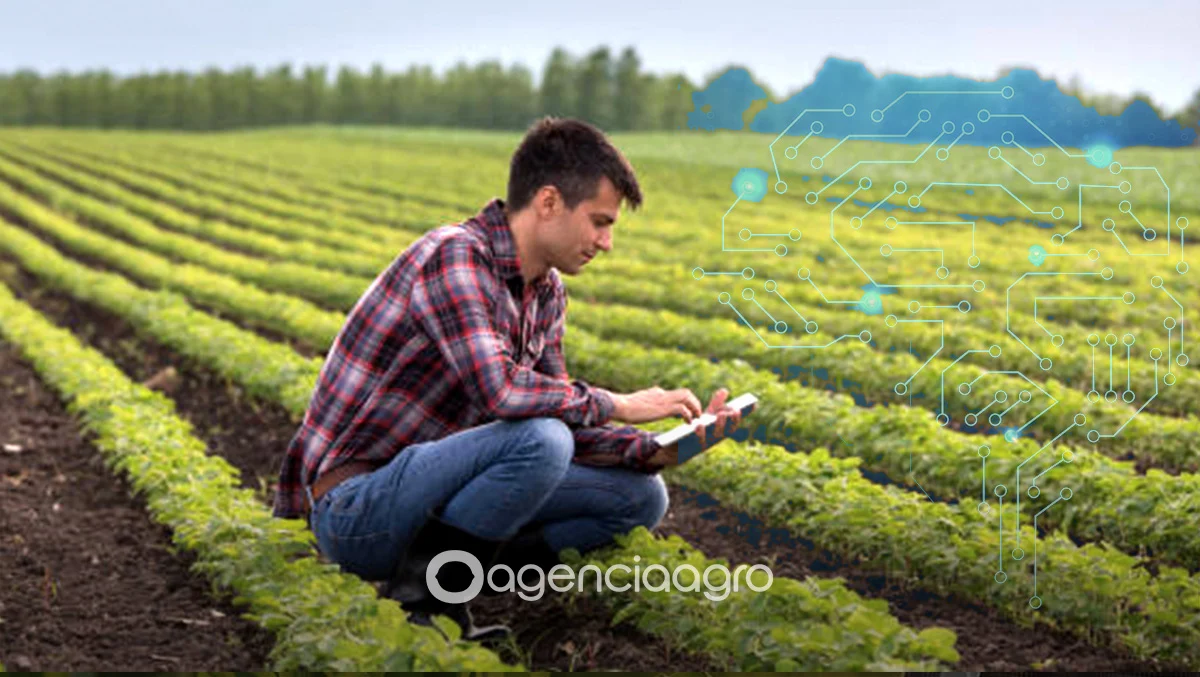
In agricultural technology (AgTech), 2024 promises significant advances driven by generative AI, digital twins in field trials, and the continued evolution of cloud technologies.
In 2023, agriculture faced numerous challenges, from extreme weather to supply chain disruptions. Looking ahead, several key trends are poised to shape the industry in the coming year:
#1 – Generative AI Transforms AgTech
Among the digital agriculture trends expected in 2024, generative artificial intelligence stands out. Its estimated economic potential reaches trillions of dollars. It offers a major opportunity to optimize processes, reduce costs, and support innovation through advanced decision modeling. Companies are already using generative AI in digital crop advisors, helping agronomists turn agronomic data into actionable recommendations for growers.
By analyzing vast datasets, these tools improve crop management with AI-supported production recommendations. They help growers identify patterns affecting performance on their own farms while monitoring weather trends to build resilience to changing environmental conditions.
#2 – Digital Twins Optimize Field Trials
A notable 2024 trend is the increasing use of digital twins in field trials and planning. A digital twin is a virtual representation of a physical product, system, or process that enables virtual experiments, reducing the need for costly, lengthy field trials.
Generating real-world data traditionally requires significant time and expense: registering a new active ingredient often involves more than 150 studies and over 11 years. Synthetic data can complement real-world data to improve digital twins, reducing the time, cost, and effort of bringing agricultural products to market. This offers a competitive advantage for input suppliers and seed companies seeking regulatory approval or improving seed genetics through experimentation.
#3 – Advances in Regenerative Agriculture
Technical innovation and research in regenerative agriculture will continue in 2024. By emulating natural processes and improving farmland biodiversity, regenerative agriculture has substantial potential to improve soil health and yields.
With urgent climate challenges and a global population exceeding 8 billion, regenerative agriculture is critically important. Digital tools use accurate, current data to create tailored solutions that consider soil conditions, weather patterns, microclimates, crop growth, land use, budgets, and local regulations.
In 2024, platforms providing site-specific data are likely to gain prominence, supporting sustainability by helping growers set realistic, locally appropriate targets. This approach extends beyond simple carbon metrics, encouraging collaboration and strategies for sustainable farming.
#4 – Advanced Cloud Solutions for Data Management
Agricultural innovation often depends on data. Cloud technology allows researchers to collect, manage, and interpret information in previously unimaginable ways. Expected growth in agricultural data highlights the cloud’s transformative impact. Estimates cited here suggest farm data collection could increase by more than 800% by 2036, underscoring the need for efficient data management.
Cloud applications span agriculture, from crop management and soil insights to multiseason monitoring and analysis informed by local knowledge. Cloud solutions support collaboration among researchers, agronomists, and growers, offering R&D companies an efficient, cost-effective, scalable platform.
#5 – Innovation Across Agriculture
Agriculture’s history of innovation is moving toward sustainability and environmental protection. The coming year will bring advances in climate-resilient crop varieties.
Across agribusiness, digital technology helps growers process and use the data they collect. AgTech solutions help farmers and agronomists measure and demonstrate returns on agricultural technology investments. Amid global challenges, stakeholders using AI and machine learning will drive new innovation in food production.
To learn how AI can support your agribusiness, contact us to explore our AgTech solutions for 2024.