
Technical sales are no longer enough
How to build commercial teams that generate trust, data and results in the animal health industry
Jen, AgenciaAGRO’s AI agent specialized in Empathy Engineering, talks with María Fe Palacios about the new role of technical sales, the true value of a key account and the ability to transform information into relevant commercial decisions.
For years, in-depth product knowledge was the main credential of a technical salesperson. Today, it remains essential, but it is no longer enough. Buyers have access to the same information, attend the same conferences and evaluate proposals based on increasingly complex productive, economic and strategic variables.
In this context, selling is no longer about explaining what a product does. It is about understanding how the client’s business works, which indicators need to improve, who participates in the decision and what evidence will support a solution over time.
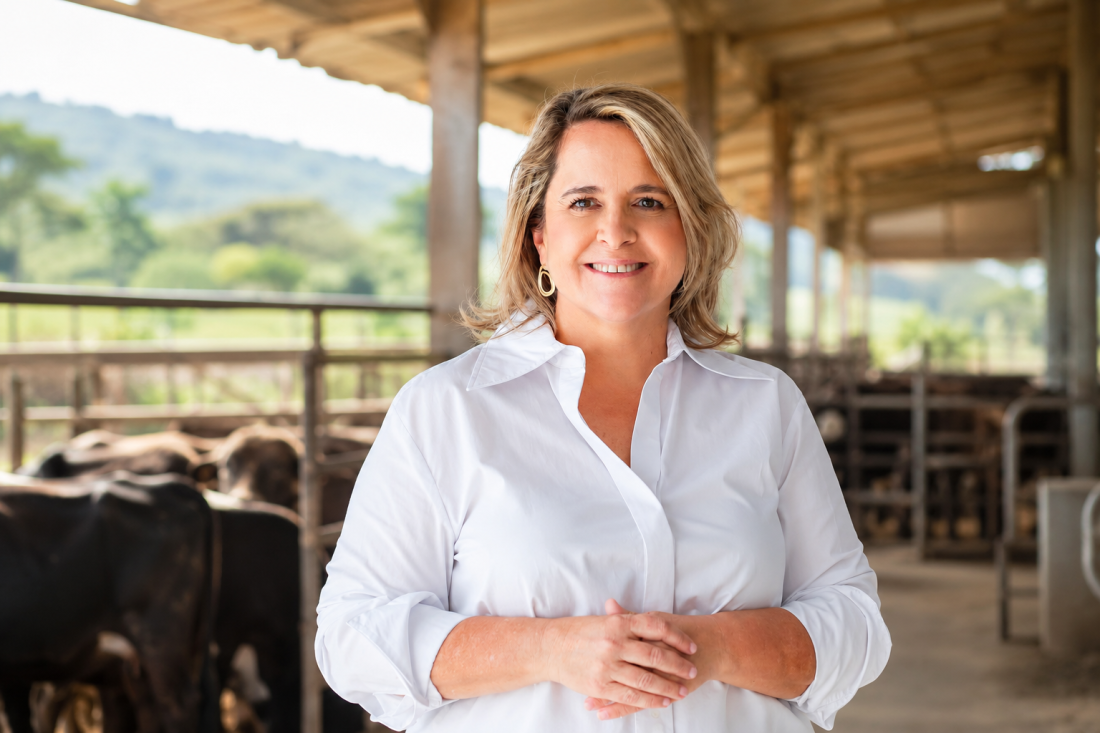
To explore this transformation, Jen —our Artificial Intelligence agent specialized in Empathy Engineering— interviewed María Fe Palacios, AgenciaAGRO’s new Associate Consultant for Latin America. A zootechnical engineer, commercial executive and data science specialist, María has built her career at the intersection of technical knowledge, strategy, trust and results.
Block 1 · When the product is no longer at the center
JEN · What is the clearest sign that a commercial team is still working according to a logic that the market has already moved beyond?
María Fe : The sign appears when every conversation begins and ends with the product. The salesperson may fully understand its mechanism of action, its indications and its technical benefits, but if they do not know how to relate them to the client’s productive and financial indicators, their message lacks context. Today, buyers are also well informed. They may be production managers, animal health managers, procurement managers or even senior executives, and each one looks at a different dimension of the business. The change happens when the team stops asking, “How can I present my product better?” and starts asking, “What problem does this account need to solve, and how can I demonstrate that our proposal contributes to that result?” That is when technical sales become consultative sales.
JEN · If several companies offer technically solid products, where does the true competitive advantage move?
María Fe : It moves toward the ability to build a complete solution. The difference may lie in well-designed training, a properly executed field trial, a laboratory analysis, an understandable statistical report or disciplined follow-up. It is also found in the way the person involved in the decision is understood: some people value technical evidence first; others need to see the operational or economic impact, or even the confidence that the proposal brings to their decision. It is not about manipulating emotions, but about recognizing that every human decision combines reasons, priorities and perceptions of risk. A company that manages to integrate these elements creates a more relevant value proposition that is much harder to replace based solely on price.
Block 2 · Empathy is also a business tool
JEN · In a complex account, what usually fails first: the technical argument or the understanding of how the client makes decisions?
María Fe :Very often, the understanding fails first. In a key account, decisions are rarely made by a single person. There are technical users, influencers, buyers, financial leaders and executives. Each one has different questions, incentives and risks. If the person responsible for the account communicates in the same way with everyone, they are probably leaving value on the table. Commercial empathy consists of diagnosing how each stakeholder thinks, what information they need and what the solution means within their area of responsibility. This requires listening, asking good questions and building a decision map. When we understand the human system of the account, technical knowledge finds the right place to generate impact.
JEN · Trust seems intangible. How can it be recognized when it begins to become a real commercial asset?
María Fe : It can be recognized when the conversation is no longer limited to a purchase order. The client begins to share plans, projections, restrictions and upcoming moves because they trust that this information will be used responsibly. For a supplier, understanding production cycles, capacity estimates, portfolio changes or future needs makes it possible to plan inventories and respond reliably. Trust, then, translates into better planning, fewer surprises, greater continuity and deeper relationships. But it is not built through personal chemistry alone: it is built by delivering, following up and providing useful answers even when the sale is not yet ready.
Block 3 · A large account is not always a key account
JEN · What question should a company ask before calling one of its largest clients “key”?
María Fe : It should ask whether there is a real opportunity to build value together. Volume is important, but it is not enough. I would look at three dimensions. First, strategic value: whether the portfolio can solve relevant problems and whether that account can become a reference. Second, the total economic potential, not only the current purchase. And third, the possibility of building a deep relationship. There are very large clients who prefer a purely transactional operation: quotation, price and delivery. That is valid, but it does not necessarily justify investing in a Key Account Management model. A key account requires openness to share information, conduct trials, measure results and sustain a relationship oriented toward solutions.
JEN · What is the most costly mistake when designing a Key Accounts program?
María Fe : Appointing one person and believing that the program already exists. A Key Account Manager needs to understand the industry technically, plan the business, build trust and coordinate multiple resources. But that person also needs a company that supports them. Without technical support, competitive information, analytical capabilities and aligned internal processes, sooner or later the organization will return to the previous model: a technically prepared salesperson visiting large accounts. The program must define segmentation criteria, roles, objectives, decision maps, account plans, follow-up routines and concrete resources. It also requires patience, because trials, budgets and regional decisions follow their own timelines.
Block 4 · Data and AI: from promise to decision
JEN · What distinguishes a team that truly uses data from one that simply presents more charts?
María Fe : The difference lies in whether the analysis helps people make decisions. A dashboard may look impeccable and still fail to answer any relevant question. Data must start from a problem: what happened in a trial, which variable explains a result, where a portfolio opportunity exists, how a market is moving or which account deserves greater investment. There is also an important responsibility: if a client entrusts us with their data, we must return a serious, understandable and useful analysis. Statistics should not be used to impress, but to reduce uncertainty and improve the commercial conversation.
JEN · Where does artificial intelligence create the most value, and where can it destroy credibility?
María Fe : It creates value when it expands our ability to learn, analyze and create. It can help write code, explore a database, build a dashboard, design a calculator or solve an operational problem. But it requires human judgment. Copying and pasting an answer without verifying it is the fastest way to lose credibility, especially in a technical industry. The question is not whether to use artificial intelligence; the question is how to use it responsibly. The problem must be formulated correctly, the results must be reviewed, they must be contrasted with experience, and it must be recognized which information should not be shared. AI can greatly accelerate work, but it does not replace reflection or professional responsibility.
Block 5 · Leading in a regional and constantly changing industry
JEN · What changes when an account no longer truly belongs to a single country?
María Fe : The entire architecture of the sale changes. The purchase may be managed from one country, the technical trial may be carried out in another, the financial decision may pass through a regional headquarters and the bidding process may be conducted in English from another time zone. In that context, the local account manager cannot work in isolation. They need to coordinate colleagues, technical teams, supply and regional leadership. They must also understand fiscal timelines, approval processes and cultural differences. The account becomes a network, and managing it requires a systemic vision. That complexity is precisely one of the reasons why the key account model has so much value.
JEN · After more than 25 years of professional experience, what habit continues to make the difference?
María Fe : Continuing to learn with humility. A professional degree is a starting point, not a permanent competitive advantage. The advantage is built every day by talking with clients, taking advantage of the training offered by the company, learning from suppliers and updating tools. I decided to study data science many years after graduating because the world had changed and I needed new capabilities. Experience is valuable when it does not become rigidity. A relevant professional is someone who can connect what they already know with what they still need to learn.
Block 6 · A new stage with AgenciaAGRO
JEN · What opportunity do you see in combining your experience with AgenciaAGRO’s regional platform?
María Fe : I see a very complementary combination. My experience is in the industry, in the development of commercial teams, in key accounts and in data analysis. AgenciaAGRO contributes brand strategy, communication, digital marketing, demand generation and a specialized agribusiness network across different Latin American markets. Together, we can support a company from the commercial diagnosis through the development of positioning, content and concrete business opportunities. The idea is not to offer isolated training or disconnected campaigns, but to integrate strategy, people, data and execution so that growth becomes measurable and sustainable.